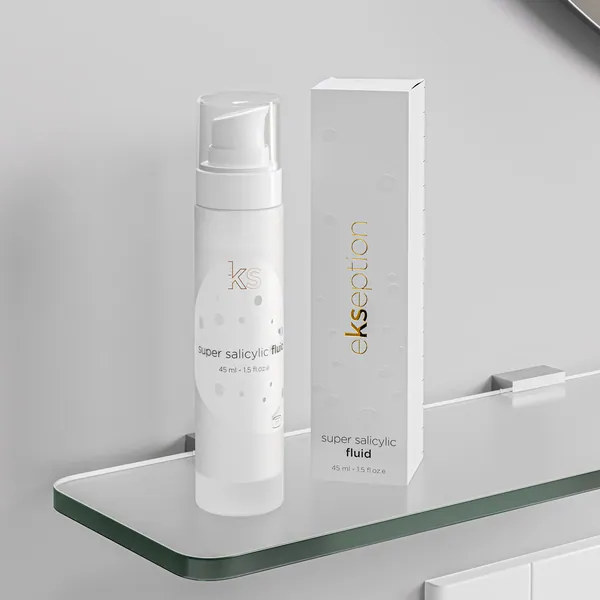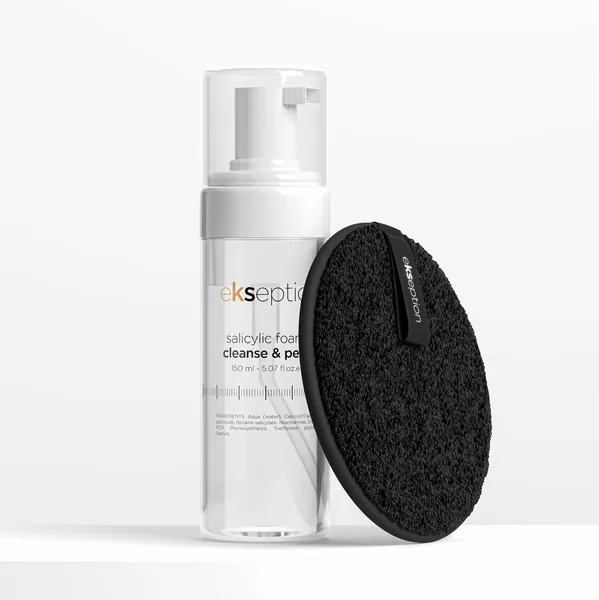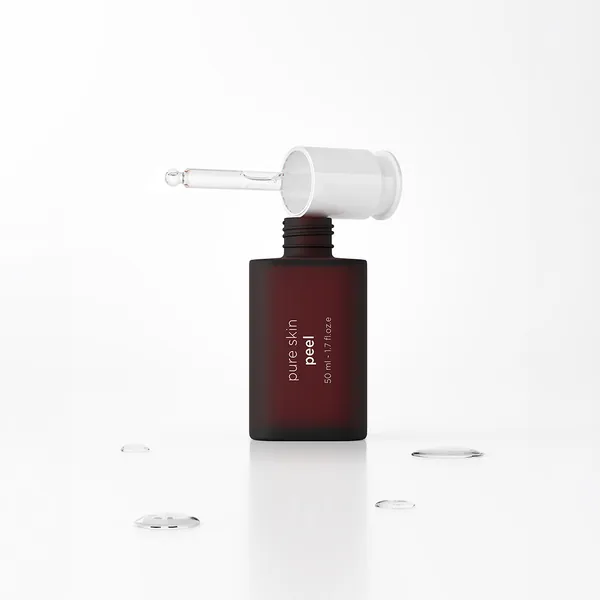
Blemishes are usually explained by three factors: too much sebum, clogged pores and inflammation. A fourth one plays a key role — the bacteria that live in our pores, and the light-sensitive molecules they produce: porphyrins.
What are porphyrins?
Porphyrins are ring-shaped molecules found throughout nature — haemoglobin and chlorophyll are built around them. On the skin, they are produced mainly by bacteria living in the hair follicles. Their particularity: they absorb light. When exposed to visible or UV light, they can produce reactive oxygen species — free radicals that damage surrounding cells.
Cutibacterium acnes: friend or foe?
Cutibacterium acnes (formerly Propionibacterium acnes) naturally lives in the follicles and sebaceous glands. Most of the time it is harmless and even helps keep the skin in balance. A recent review describes it as both a friend of skin homeostasis and, under certain conditions, a contributor to acne, with porphyrin among its virulence factors (Boyanova, 2023).
When a pore is clogged with sebum and dead cells, the bacterium finds the oxygen-poor, sebum-rich environment it likes. It multiplies and releases porphyrins.
How porphyrins feed inflammation
Exposed to light, the porphyrins form free radicals. These damage the cells around the follicle and trigger an inflammatory response, which attracts more immune cells. The result: red, swollen blemishes — papules and pustules — and a higher risk of marks afterwards.
The same property is used in light-based treatments: blue light activates the porphyrins in a controlled way to reduce bacterial activity. These treatments are performed by dermatologists and trained professionals.
Daily care for blemish-prone skin
- Cleanse gently, twice a day, with a slightly acidic cleanser that removes excess sebum without stripping the skin.
- Exfoliate regularly with organic acids such as salicylic acid, which works inside the pores and helps keep them clear. Read salicylic acid for oily and blemish-prone skin.
- Balance the skin with actives such as zinc PCA, niacinamide and azelaic acid, which help regulate sebum and soothe the look of redness.
- Protect from the sun every day with a light, non-comedogenic sunscreen.
- Look after yourself: stress and lack of sleep can increase oiliness and breakouts.
For persistent or severe acne, see a dermatologist. For blemish-prone skin, a series of professional peels with salicylic acid, combined with the right home routine, helps keep pores clear and the complexion even.
Questions
Is Cutibacterium acnes a bad bacterium?
No. It is a normal part of the skin's microbiome and helps keep the skin in balance. It becomes a problem when pores are clogged and the conditions favour its overgrowth and inflammation.
Why is blue light used for blemish-prone skin?
Porphyrins absorb visible light, especially blue light. Light-based treatments use this property to reduce bacterial activity. They are carried out by dermatologists and trained professionals.
Does sun exposure help acne?
A tan can hide blemishes for a while, but UV thickens the surface, can worsen marks and pigmentation, and damages the skin. Use a light, non-comedogenic sunscreen every day.
Sources
Looking for a treatment?
ekseption peels are applied by trained professionals. Find a professional who works with ekseption near you, or ask us.
Find a professional